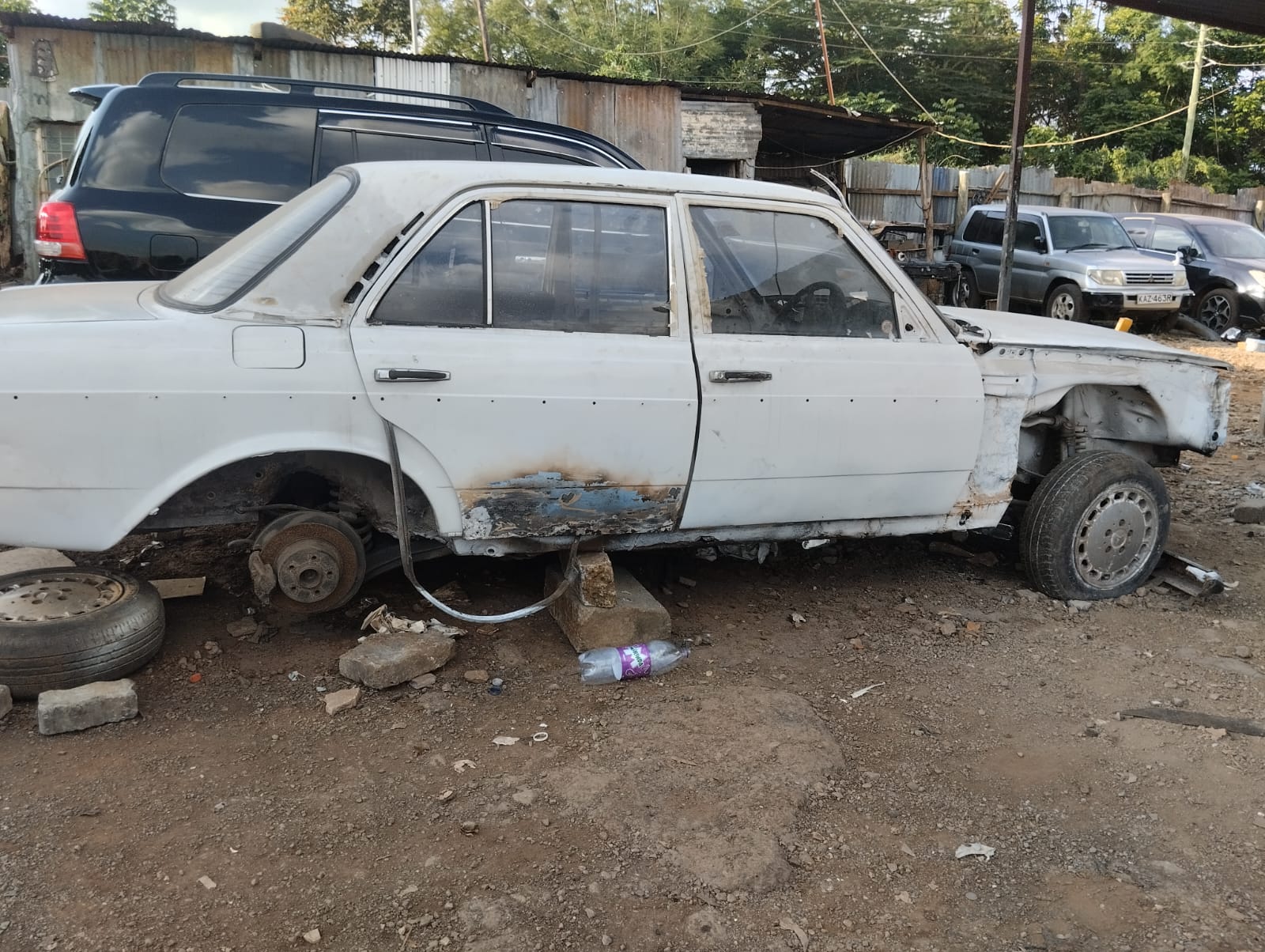
Accident chassis repair and alignment
Loresho Accident Garage specializes in repairing accident vehicles with Bent frames, twisted chassis, misaligned wheels — we restore structural integrity for every vehicle class: saloons, SUVs, vans, and heavy trucks.
Saloon and Hatchbacks
Passenger saloons — including sedans, hatchbacks, and station wagons — use a monocoque (unibody) construction where the body and chassis are a single welded shell. Any collision, kerb strike, or pothole impact can distort the floor pan, sill sections, or front subframe, throwing alignment parameters out of tolerance immediately.
We handle all common saloon makes: Toyota Corolla/Camry, Nissan Sylphy/Sunny, Honda Civic/Accord, Subaru Impreza/Legacy, Mazda 3/6, VW Golf/Passat, BMW 3/5 Series, Mercedes C/E Class, and more.
SUVs & 4×4s
Body-on-frame SUVs (Land Cruiser, Prado, Defender, Hilux) have a separate ladder frame that can be pulled and straightened independently of the body. Crossovers (RAV4, CR-V, Tucson) use monocoque construction but with heavier components than a saloon. 4×4 systems add front differential, propshaft, and transfer case geometry to the alignment equation.
We cover: Toyota Land Cruiser / Prado / Hilux, Nissan Patrol / Navara, Land Rover Defender / Discovery, Mitsubishi Pajero / L200, Ford Ranger, Isuzu D-Max, Honda CR-V, Subaru Forester / Outback, Kia Sportage, Hyundai Tucson, and more.
Vans & Minibuses
Vans, matatus, and minibuses are commercial workhorses that are often overloaded, driven on poor roads, and rarely receive preventive chassis maintenance. Misalignment causes uneven tyre wear, pulling, and driver fatigue — and in passenger-carrying vehicles, it's also a safety and licensing issue. We offer fleet service agreements for operators with multiple vehicles.
We cover: Toyota HiAce, Nissan Urvan / NV350, Mitsubishi Rosa, Isuzu Journey, Mercedes Sprinter, Ford Transit, VW Transporter, and Mazda Bongo variants.
Trucks & HGVs
Trucks — from light pickups to multi-axle rigid and articulated vehicles — carry enormous loads over poor surfaces. Chassis flex, frame twisting, and axle misalignment are common, and in a laden truck they cause rapid tyre destruction, differential wear, and dangerous handling. We operate Kenya's only commercial-grade chassis jig capable of handling vehicles up to 32 tonnes GVW.
We cover: Isuzu FRR/FSR/FTR/FVR, Mitsubishi Canter / Fuso, Toyota Dyna / Hino, Nissan UD, Mercedes Actros / Atego, MAN, DAF, Volvo FH, Scania, and crane/tipper bodies.
Is Your Chassis Affected?
Many chassis and alignment problems develop gradually. By the time they're obvious, significant secondary damage has already occurred. If you notice any of these, bring the vehicle in immediately.
1. Vehicle Pulls to One Side
Letting go of the steering wheel causes the vehicle to drift left or right. Can indicate unequal toe, camber, or caster side-to-side — or a bent chassis that's built-in offset into the geometry.
2. Steering Wheel Off-Centre
The wheel is turned slightly to keep the vehicle straight. Classic sign of a thrust angle problem — the rear axle is pointing off the vehicle centreline, forcing the driver to continuously correct.
3. After a Collision or Kerb Strike
Even a low-speed collision or a hard kerb strike at 30 km/h can permanently deform chassis components that look undamaged. Always request a chassis inspection after any impact, even if the car seems to drive normally.
4. Unexplained Fuel Consumption Rise
Tyres scrubbing due to bad toe or thrust angle increase rolling resistance measurably. A truck or van where fuel consumption has risen 8–12% without explanation should have its axle alignment checked — it often pays for itself in saved fuel within weeks.
5. Vibration Through Steering
A chassis that's been bent or had repair work done incorrectly can introduce shimmy under braking or at speed. Different from wheel balance vibration — this is felt in the column even on a straight road.